


Why I can’t put away my bear market worries #4: Consumer sentiment is becoming more negative
Most of the recent sentiment surveys show the same result: While sentiment about current conditions–AKA the present–remains strong, sentiment about conditions 6 to 12 months out is sliding in a pessimistic direction. The recent Bloomberg Consumer Comfort...
Why I can’t put away my bear market worries #3: Money flows that look like a bounce and not like a rally
Rallies share one very important pattern. In a rally more investors and traders want to jump in as prices rise. They’re convinced that rising prices mean that prices will climb even more in the future and so they buy, driving prices higher. Bounces follow a...
Testing, testing: Bounce, rally, or retreat?
U.S. stocks moved toward a key test today with the Standard & Poor’s 500 approaching the 2550 to 2600 level that signals the top of the recent volatility range and likely technical resistance. If the index breaks above this level, the market could run...
How good is Fed chair Jerome Powell at herding cats?
It’s an extraordinarily busy week for the Federal Reserve–verbiage wise. Saturday, January 5, John Williams, head of the New York Federal Reserve Bank, Raphael Bostic of the Atlanta Fed, and Mary Daly of the San Francisco Red all spoke. Today, January 7,...
The key to this bear market–it’s global; and any turn about will have to be global too
If you’re trying to figure out this market–and who isn’t?–down 700 points on the Dow on Monday; up 1000 on Wednesday, down 400 points on Thursday before finishing up 250 points, I’d suggest starting with the observation that this bear...
Did Monday action signal a (temporary) bottom?
Monday’s big drop in U.S. stocks was unusual in this period of frequent market routs–and unusual in an important way. Even as the market has tumbled day after day, investors haven’t seen a big 90% down day of the kind that signals a (perhaps temporary) capitulation...
Nobody wants to get too far ahead of the news in this stock market
After yesterday’s bounce in riskier bounce-worthy stocks, today the U.S. market is seeing a slight pull back. At 1:30 p.m. New York time the Standard & Poor’s 500 is off 0.34% and the Dow Jones Industrial Average is lower by 0.05%. The NASDAQ...
U.S. stocks want to bounce, but not so sure about a rally
Bounce, yes. Rally, maybe. What the difference? Conviction and duration. The wider market isn’t sure that the bad news on the U.S. China trade war is over and doesn’t want to get blind-sided. That’s why the broad indexes such as the Standard &...
Fed’s Powell speaks softly; stocks roar higher
Sometimes the market hears what it wants to hear and then storms higher (or lower) on what is little more than a hint. In the short run that doesn’t much matter since the oftentimes huge gains are real and investors can and do take them to the bank. In the...
What’s ahead for this market? Does it turn into a true bear?
If you own any of the big technology stocks that led the U.S. higher in the first eight months of 2018, the losses over the last six weeks sure make this feel like a bear market. Remember that the classical definition of a bear market is a drop from the high of 20% or...
Return of buybacks enough to put floor under U.S. stocks
Part–but certainly only part–of the weakness in U.S. stock prices in October came from the blackout period on companies buying back their own shares. Many companies have self-declared buyback blackout periods running from a couple of weeks before the...
Stocks hold most of last hour’s gains–and that’s important
An extremely volatile day–but the market held most of its gains into the close–and that’s important if you’re trying to figure out whether we’ve seen the last (for a while, at least) of this week’s selling. Let’s take a look...
No fade today after market takes off on positive China “feeling”
The market didn’t reverse or fade today. The Standard & Poor’s 500 stock index hit 2656 by 10:30 and then, despite a dip that took 20 points off the index around 12:30 and a lot of up and downs that ultimately went nowhere, managed to close at 2656...
“Smart Money” and shorts are skeptical on Monday rally
The Smart Money Flow Index shows that professional money managers remain skeptical of the rally. The index is near a two-year low and advanced only 1.2% on Monday, a day that saw the Dow Jones Industrial Average move up 2.8%. (The Smart Money Flow Index tracks moves...
Reasons to worry about this bounce
Of course, it would be great (if you’re long U.S. stocks) if today’s bounce marked the beginning of a recovery to the record highs in place before last week’s plunge. But… It’s very early in this bounce. It’s typical for a bounce to...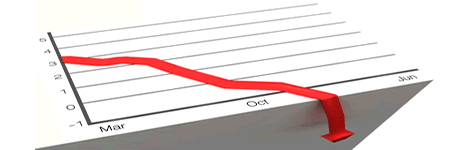
So what’s behind today’s plunge in U.S. stocks?
Okay, so the announcement of U.S. tariffs on $50 billion of Chinese goods didn’t help the market today. But U.S. stocks, which had been down 1.30% for the Standard & Poor’s 500 at 11 a.m. and down 1.38% for the Dow Jones Industrials, didn’t...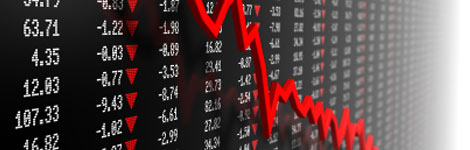
What’s behind this morning’s drop? Not what the talking heads are claiming
As of 11:30 a.m. New York time this morning, the Standard & Poor’s 500 Stock index was down 1.15%. The Dow Jones Industrial Average was off 1.02%. And the technology heavy NASDAQ was lower by 1.84%. Much of the talk this morning has centered on news from...
Some old market leaders try to reassert themselves
The market as a whole hasn’t gone much of anywhere this morning. As of 11:30 a.m. New York time the Standard & Poor’s 500 was ahead 0.25%; the Dow Jones Industrial Average was off 0.54%; and the NASDAQ Composite was down 0.15%. But that apparent...
This is as good as it gets, says Goldman Sachs: Why that’s important to you in thinking about the next leg in this stock market
On Thursday February 22, Goldman Sachs wrote in a note to clients that the economic macro data as likely to be “as good as it gets.” This isn’t, in my opinion, a call for an immediate plunge in the markets. But with U.S. stocks trading near all time...
V bottom or double top before deeper correction
As of yesterday the Standard & Poor’s 500 stock index had climbed 5.8% in the last five trading sessions. That recouped much of the 9.03% drop (not quite an official correction of 10% or more) from January 26 through Februry 8. Which, of course, raises the...
Fed signals “maybe”on four interest rate hikes in 2018 but stocks stabilize anyway after yesterday’s drop
As expected the Federal Reserve left interest rates unchanged at today’s meeting of the Open Market Committee. But in its post-meeting statement, the last in the chair for Janet Yellen, the central bank added language that points toward a slightly more...
Netflix rally on earnings tells us more about how complacent this market than about Netflix
This market remains determined to rally as we head into earnings season. Look no further than the reaction to earnings from Netflix (NFLX) for evidence. The stock market could have reacted to yesterday’s earnings from Netflix (NFLX) by selling down the shares....
Buy on the dip reflex intact today
Last night I posted that today would be critical for this market’s buy on the dip reflex. Yesterday’s move up after the Wednesday rout wasn’t convincing, I noted, and a retreat today would have raise doubts that the long-standing buy on the dip...
Is buy on the dip intact? Celebrate 20 years of Jubak Picks and use your 30-days of free access to my $199 paid JubakAM.com site to read my take on tomorrow’s market volatility
So did today’s slight rally put an end to the dangers of a correction? Is buy on the dip still in force? Usually I’d be teasing my post on my paid JubakAM.site here and telling you to subscribe if you want to read all of what I think tomorrow will bring...
Solid earnings beats from Citigroup and JPMorgan Chase barely push S&P 500 into the green
Two out of three of the big banks reporting first quarter earnings this morning beat Wall Street estimates. Citigroup (C) reported earnings of $1.35 a share, 11 cents a share above the Wall Street consensus. JPMorgan Chase (JPM) reported earnings of $1.65 a share, 12...
Another down day for U.S. stocks–consensus still saying that’s a good thing
U.S. stocks closed slightly lower again today, making this week three for three on the down side. The Standard & Poor’s 500 stock index was off by 0.2% at the close and the Dow tripped lower by 0.33%. The Russell 2000 small company index was down 0.64%. But...
Nervous as we hit new high after new high? First dip, whenever, is likely to be limited
Today, February 21, the Dow Jones Industrial Average, the Standard & Poor’s 500, and the Russell 2000 each hit new record highs. As of Friday February 17, the &P 500 had already climbed 5% for 2017. But valuations do look stretched. The forward price to...
Economy and financial markets point in different directions ahead of Wednesday’s Fed meeting
Pity the poor Federal Reserve. In making decisions about interest rates–in this case about whether or not to raise interest rates at its June, July or September meetings–it has to consider the condition of both the real economy and the financial markets. And right now...
UK voters decide to leave European Union–What’s next (Part 1 short term effects)?
By a surprisingly large margin of 52% to 48% the United Kingdom voted to leave the European Union in Thursday’s Brexit referendum. Global financial markets plunged in a decline all the more dramatic because traders and investors had decided on Wednesday that the...Jim’s Daily Email Alerts:

Every post from Jubak Picks straight to your mailbox. And they're free!