
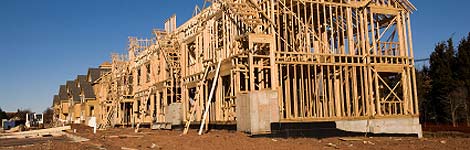

April new home sales disappoint
New home sales in April were at a seasonally adjusted annual rate of 569,000. That was well below the consensus among economists surveyed by Briefing.com for annualized sales of 605,000. The April annualized rate was down 11.4% from March. The housing market...
Very preliminary evidence shows higher interest rates slowing U.S. economy
The data actually make sense when you consider the time lags and what these surveys measure. Contracts to purchase previously owned U.S. homes fell in November, unexpectedly, according to the National Association of Realtors in Washington. Pending home sales declined...
New home sales tomorrow are early test of Fed’s increase in interest rates
Tomorrow, Friday december 23, we get news on new home sales in November. Coming after some market weakness this week and before the long Christmas holiday (financial markets are closed on Monday, December 26), this report has the power to set the tone for a few days....The happiness of "early" and the sadness of "too early": How to maximize your portfolio's happiness
There’s early. And then there’s too early. Early is buying Apple (AAPL) on October 6, 2008 at $98.14 and having to wait until March 2009—six months–before the stock moves up. And up. And up. On March 6, 2009 Apple closed at $85.30. A year later on March 5, 2010...Existing home sales bring (some) good news for the U.S. economy
I missed reporting on this piece of economic good news last week. And it’s an important piece of data since it feeds into my belief that the U.S. economy is strengthening and that the U.S. market is the place to be in the first half of 2011. Existing home sales for...Subsidies end and housing starts plunge even more than expected
Hard to find a silver lining in this data. Housing starts in May fell to a 593,000 annual rate, according to numbers released this morning, June 16, by the Department of Commerce. That was a 10% drop from April’s annual rate of 659,000. The April rate itself was...Sell Rayonier (RYN)
I’ve already sold Rayonier (RYN) out of the Jubak Dividend Income Portfolio today, May 28. And now I’m selling it out of Jubak Picks as well. Nothing wrong with the stock—when the real estate market does finally turn, this timber and real estate REIT will do quite...Is the slowing in the rate of home price increases, a forecast that the economic recovery will slow at the end of 2010?
This is exactly what I’m afraid of for the 12 months ahead. Yesterday’s numbers on home prices suggest that as the economic stimulus money gradually dries up over the next 12 months, the economic recovery will lose some steam. Not enough to send us back into recession...Could it be? Housing stocks actually leading the market?
Bounce or trend? That’s the question. The dollar took a break yesterday as it met some resistance after moving up so strongly in January. Commodities hit support that then rallied. At least that’s one way to look at it. From a purely technical point of view all we’ve...Behind the bad news in housing sales is there even worse news?
Bad numbers on existing home sales this morning. But is the reason behind the numbers even scarier than the numbers themselves? The numbers, mind you, were bad enough. Existing home sales fell 2.7% in August. The drop comes after four consecutive months of increasing...The Fed decided to go slow on removing housing stimulus–and that's a good thing
I heard what I was hoping to hear in yesterday’s statement from the Federal Reserve’ s Open Market Committee: the U.S. central bank isn’t going to cut back its support for the U.S. mortgage market ahead of schedule or abruptly. And that will keep...Is this the end of the housing recovery? Even talking about an end to government subsidies sends the market into a tizzy
The program that gives first time home buyers an $8,000 tax credit is due to expire at the end of November. The Federal Reserve will talk about winding down its buying of mortgage-backed securities in its two-day meeting this week. Will that be the end to the rally...Update Cemex (CX)
Certainly Mexican cement producer Cemex (CX) isn’t out of the woods yet, but the trees sure look a lot less menacing. The company wound up buried under cord upon cord of debt, thanks to an aggressive acquisition strategy that culminated in the 2007 purchase...The July 27 battle in housing stocks is a preview for rising volatility across the market in the days ahead
It’s going to be one bloody battle. Bulls are bidding up the shares of home builders on reports that U.S. new home sales climbed 11% in June. That’s the biggest jump in eight years. Last week,before the news, short sellers had been loading up on these...Jim’s Daily Email Alerts:

Every post from Jubak Picks straight to your mailbox. And they're free!