


My fifth pick for my new ETF portfolio is now available
Please note that as I wrote in announcing this new ETF portfolio, the first three ETF picks for my new Perfect 5 ETF Active Passive Portfolio were the last that I’ll be posting on my free Jubak Picks site. If you want to get the last two picks and/or to follow...
Latest data say China’s economy slowed in July
Reports released by China at 10 p.m. New York time Sunday show China’s economy slowing in July. Industrial output rose 6.4% year over year. Industrial output grew at an annual 7.6% in June. Economists had projected 7.1% growth in output. Retail sales, another...
Market goes from worried to freaked out today
U.S. President Donald Trump threatening North Korea with fire and fury was certainly enough to worry global stock markets yesterday. Taunts from North Korea overnight and a promise from that country to drop four missiles into the waters off Guam sometime around the...
Haven assets in demand after day of heated rhetoric on North Korea and nukes
Not surprisingly haven assets such as gold and the Japanese yen are up today. So are volatility measures such as the CBOE S&P 500 Volatility Index (VIX.) Surprisingly, the rush to safety hasn’t been as strong as you might expect after a day when...
China economic data too good to be true?
Talk about hitting your marks! Second quarter GDP grew in China at a 6.9% year over year rate, Beijing reported over the weekend. The consensus projection called for 6.8% growth. In the first quarter China’s GDP grew at 6.9% year over year. In June Fixed Asset...
Is buy on the dip intact? Celebrate 20 years of Jubak Picks and use your 30-days of free access to my $199 paid JubakAM.com site to read my take on tomorrow’s market volatility
So did today’s slight rally put an end to the dangers of a correction? Is buy on the dip still in force? Usually I’d be teasing my post on my paid JubakAM.site here and telling you to subscribe if you want to read all of what I think tomorrow will bring...
Markets rediscover risk–for a day anyway
This morning it looks like the combination of turmoil in Washington and some weak economic data have led traders and investors to take money out of risk assets and put money into safe havens. As of 11:40 a.m. New York time, the Standard & Poor’s 500 was off...
Oil pushes higher on inventory report and global markets (except for China) follow
U.S. inventories of crude fell by 5.25 million barrels for the week ended May 5, according U.S. Energy Information Administration. Oil analysts had expected a smaller draw of 1.8 million to 2 million barrels. That was enough to fuel a big rally in oil prices with the...
Vale gets a new CEO and gets rid of control by its old shareholders
Vale (VALE) has a new CEO–that’s an important and immediate change. It will take longer to end the control of Vale by a small group of banks and Brazilian state pension funds–until 2020–but that may actually be more important in the long run....
With 6.8% GDP growth in fourth quarter, China hits 2016 target–exactly
You weren’t expecting anything else, were you? With China’s once every five years Communist Party leadership shift coming up this year, official figures released last night showed China’s GDP growing at a 6.8% rate in the fourth quarter. That puts the...
Pre-holiday move to safety starts a little early
With trading volumes already starting to slip–trading in Standard & Poor’s 500 stocks was running about 25% below its average for this time of day at noon today–traders and investors are locking in some gains and seeking safety for the week...
Rampaging dollar puts pressure on emerging market currencies and central banks
Yesterday, November 17, Mexico’s central bank raised interest rates for the fourth time in 2016. The new rate of 5.25% is the highest since 2009. The Mexican peso traded today, November 18, at 20.5626 to the dollar as of 2 p.m. New York time. And that’s just one...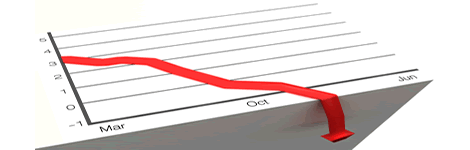
Global rout in bonds continues–new danger spot Japan
The rout in global bonds continued today. The yield on the 10-year U.S. Treasury climbed 7 basis points to 2.22% as of 3 p.m. New York time. That’s the highest level since January and comes after a jump of 37 basis points last week. Yields on the 10-year German...
3 moves for a vulnerable market
If this market is vulnerable, what should I do? I’ve been asked that question repeatedly since I first called this market vulnerable back in my October 11 post “Suddenly U.S. stocks seem vulnerable.” To answer that–the what should I do...
U.S. markets decide not to go anywhere ahead of the weekend
U.S. stocks stabilized today–thanks to better than expected earnings from Citigroup (C) and JPMorgan Chase (JPM) and, well, Friday. The Standard & Poor’s 500 stock index closed up 0.02%. U.S. crude oil benchmark West Texas Intermediate fell 0.24% but...
This “vulnerable” market looks to be shifting to a risk off stance
On the surface and if you look only at the market wide indexes, nothing much happened today. The Standard & Poor’s 500 stock index, for example, finished just 0.31% lower–that’s 6.63 points–to 2132.55. But look at which assets and sectors...
Have bond markets finally started to have doubts about central bank commitments to endless stimulus?
I’ve been waiting seemingly forever for the financial markets to show some acknowledgement that central bank stimulus policies can’t go on until the sun turns into a dark cinder. For how long have I been waiting? More than a year certainly. But each time I...Rethinking emerging markets after Libya? Who isn't? Here's how that violence has changed my thinking.
Is the violence in Libya the last straw for the world’s emerging economies? Or at least for investors in those markets? I certainly think that the big drops in emerging market stock markets are leading some investors to abandon markets that they never felt all that...The happiness of "early" and the sadness of "too early": How to maximize your portfolio's happiness
There’s early. And then there’s too early. Early is buying Apple (AAPL) on October 6, 2008 at $98.14 and having to wait until March 2009—six months–before the stock moves up. And up. And up. On March 6, 2009 Apple closed at $85.30. A year later on March 5, 2010...2011 hasn't been a great year for emerging stock markets so far
You probably have a sense that 2011 so far hasn’t been a very good year for emerging market stocks. Inflation fears, worries about interest rate increases, Egyptian turmoil, and a rising dollar that has depressed overseas stocks in dollar terms (the Brazilian real is...My five picks on the global markets to overweight in 2011
How did the stock market do in 2010? Depends. Which stock market are you talking about? The United States–where the Standard & Poor’s 500 stock index climbed 15%–or Spain—down 19% for 2010? China–where the iShares FTSE China 25 was up just 3.5%...So we've got that emerging market dip–now what do we do with it?
Be careful what you wish for. A lot of investors have watched this year as emerging stock markets have left their portfolios in the dust. From May 20 through November 5, the Brazilian stock market (measured by the gains on the iShares MSCI Brazil ETF (EWZ)) was up...How to maximize what your cash pays even when nothing is paying much of anything now
Got cash? Maybe you’d love to invest it, but where? The stock market seems pricy after a 70% rally from the March 2009 lows. And it’s been so up and down lately that it doesn’t inspire much confidence. So maybe stocks are just too risky for you. Or you’re close to...Buy Telkom Indonesia (TLK)
Telkom Indonesia (TLK), or Telekomunikasi Indonesia, is a complicated machine with all the parts, I think, moving together in the right direction. Let me explain. First, there’s the growth in Indonesia’s economy, which is forecast to show a 5.2% increase in GDP in...When elephants fly–dividends from emerging market stocks
When emerging stock markets hand you lemons, make lemonade. Specifically dividend-paying lemonade. So far 2010 hasn’t exactly been kind to emerging market stocks. The ETF (exchange traded fund) that tracks the iShares MSCI Emerging Markets Index (EEM) was down 6.4%...Update HDFC Bank (HDB)
At the end of January the Reserve Bank of India, the country’s central bank, held a conference call for analysts and investors. The message: The bank is worried about continued growth in government borrowing and strong demand for loans from the commercial sector. And...How to build a global portfolio: What countries do you want to own?
If you were building a global stock portfolio for the long run—let’s say 2020 and beyond—how would you weight the world’s stock markets? Personally, over that time period I’d pick India over China, Poland over India, and Brazil over them all. And I’d give U.S. stocks...The scariest numbers in the world?
The scariest numbers I’ve read recently aren’t projections for U.S. debt. Or how much of the globe’s farmland won’t be usable for farming by 2050. Or even how many losses the New Jersey Nets will rack up this basketball season. (4-42 and counting right now.) Nope, the...Traders jumping on the Brazilan currency bandwagon
Guess there’s no such thing as a little volatility when it comes to the Brazilian real. In December traders were calling the real the world’s most overvalued currency. Now the consensus prediction, according to a Bloomberg survey of 19 currency analysts, is that the...Jim’s Daily Email Alerts:

Every post from Jubak Picks straight to your mailbox. And they're free!